

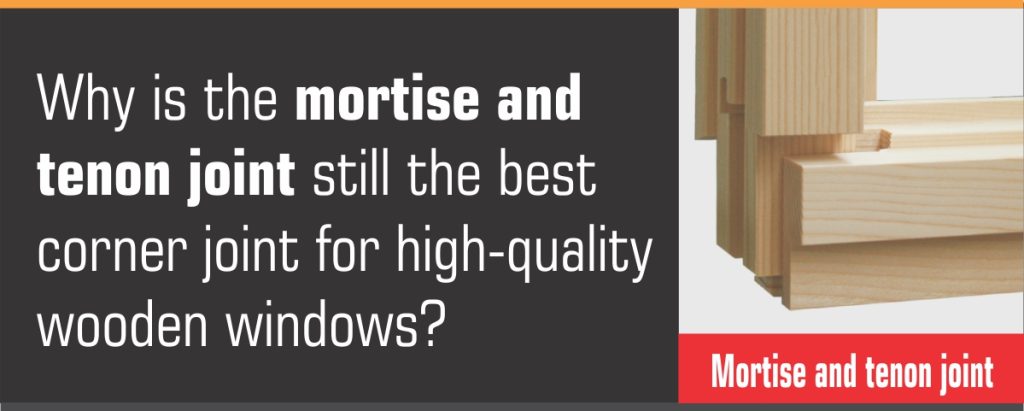
ADVANTAGES OF THE MORTISE AND TENON CORNER JOINT IN WOODEN AND WOOD/ALUMINUM WINDOWS
The frames of these products typically serve as load-bearing structural elements. In the manufacture of high-quality wooden frame structures, not only the choice of wood is important, but also the expert execution of the corner joint.
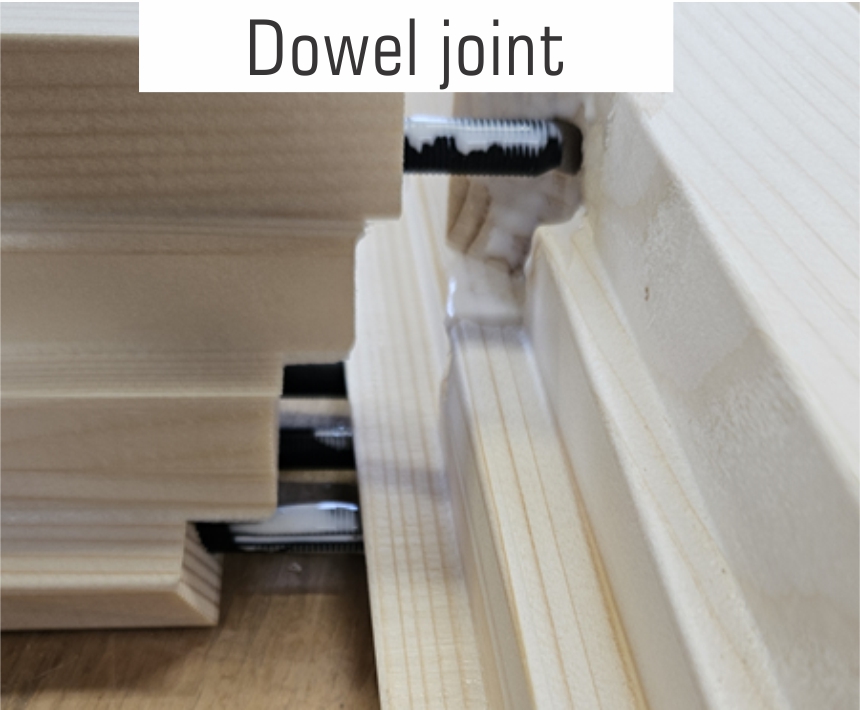
In recent years, many manufacturers of wooden building elements, when investing in equipment for producing wooden window profiles, have opted for the use of dowel joints for frames and sashes. The main reason for this is the significantly lower investment cost — not only for the machines themselves, but also for the cutting tools and control software. However, compared to the mortise and tenon joint, the dowel joint is generally considered in carpentry and construction as a simpler and cheaper solution, offering less mechanical resistance, especially in the long term or under higher loads.
Mortise and tenon joints, on the other hand, are traditional wooden connections that have been used in woodworking for centuries to build stable and durable structures. This corner joint technique involves cutting various mortise shapes into one wooden profile and crafting a matching tenon on another wooden element, which fits precisely into the mortise. This method is valued in both the furniture industry and fine woodworking for its strength and aesthetic elegance. Furniture (including wooden windows) constructed with mortise and tenon joints is generally recognized by professionals as having higher structural and aesthetic value.
Key advantages of the mortise and tenon corner joint:
A dimensionally stable connection that is relatively strong even without glue.
A natural joint without additional connectors from other materials – the connection is entirely wooden, which is essential in high-end aesthetic products.
Wood is a natural, hygroscopic material that absorbs moisture from the environment, causing it to expand or shrink. Since the mortise and tenon joint is made without foreign materials, differential expansion or contraction is avoided, which helps prevent cracking.
The increased gluing surface created by the mortise and tenon shape provides greater stability to the corner joint.
Compared to dowel joints, mortise and tenon joints offer significantly better resistance to shear forces, which are commonly present in frame structures and place strain on corner joints.
In summary, the mortise and tenon corner joint is an exceptionally durable wood joint with a long service life, offering numerous advantages over dowel joints.
However, to fully realize the benefits of this traditional joint, it is essential to ensure proper design, precise craftsmanship, and correct glue application across the entire bonding surface.
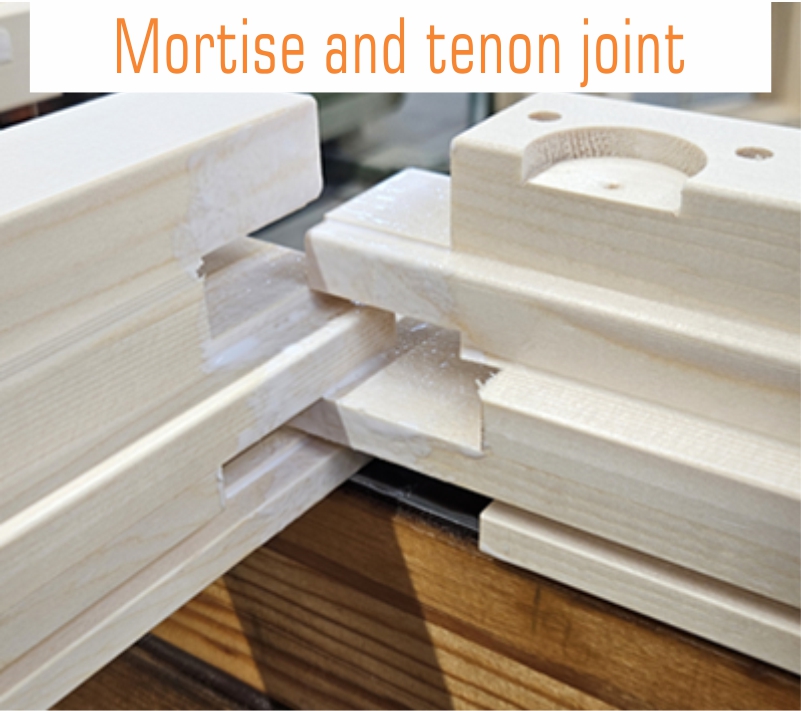
Inles has been active in the wooden building joinery market for over 75 years. With its extensive experience in construction details, the company places great emphasis on product quality and durability. One of the distinguishing features of Inles wooden joinery is its continued use of mortise and tenon corner joints — a more complex and costly construction method — in order to ensure structural integrity and longevity.
It is also worth highlighting that Inles employs state-of-the-art technology from the renowned woodworking machinery manufacturer Weinig, as well as precision cutting tools from Leitz, to achieve the highest level of craftsmanship.
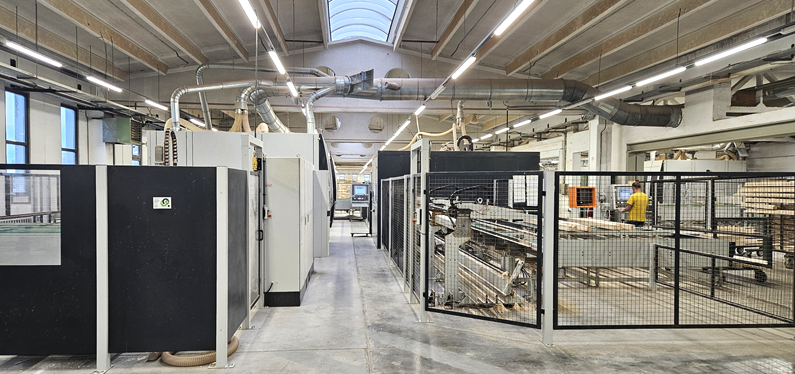
There is no doubt that at Inles, we also benefit from the deep knowledge and hands-on experience of our employees in working with wood. The company is located in one of Slovenia’s most renowned regions for woodworking craftsmanship and wooden products.
INLES – TRADITION, QUALITY, DURABILITY
